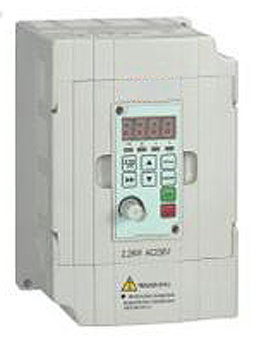
The development of PV can help break through of inverter industry

Because of its dual investigation initiated by the EU in recent years, the development of the road in terms of PV began experiencing various difficulties. Last year, Zhejiang Province, which PV manufacturers about 80% of production. Although the state has successively introduced policies to stimulate domestic demand of PV, but the overall development is not much improvement, joint development of the PV inverter industry Difficult. PV inverter shipments appeared slightly down in 2011, but is expected to double by 2015 is expected to 52GW. According to market research firm said this, the PV inverter shipments in the year 2011 from the previous year, fell to 23.6GW 23.4GW. 2013 PV inverter sales will drop 20 percent to $ 20.5 billion, a decrease of $ 5 billion more than in 2012. This is due to the global PV installed capacity and PV module average selling prices caused.

In this full of challenges and opportunities of the year, the challenges of the inverter manufacturers will continue to face include certification standards, lower cost base and local manufacturing requirements and intense competition from local suppliers. Next year could be another challenging year, global revenue growth was flat, the traditional market will gradually shift, supplier base will be remodeling. Since the inverter prices continue to decline, as well as Japan, China, India and other emerging markets is difficult to penetrate the United States could lead to growth in emerging markets can not compensate for a decline in Germany and Italy and other core markets, the world’s ten largest PV inverter manufacturer probably would have been to influence. As the price benchmarks in some Asian countries is very low, the biggest obstacle to next year inverter manufacturers face is that they do not get to make up the European operations profitable business in Asia. With 15% of the PV inverter revenues declined, reaching 4.4 billion euros ($ 6.1 billion) because the average selling price fell 14 percent, which is higher than the previous forecast of 10 percent. The market research firm expects PV inverter shipments rose 5 percent in 2012, reaching 24.5GW. This will between 2013-2015 shipments reached 52GW projected force structure.

Two professional racing drivers argue for electric motorsport

As Sam Branson squeezes into Jaime Alguersuari’s race suit at TeamSport’s go-kart track near Tower Bridge, he grabs his crotch and pats the Formula E driver on the shoulder. “There’s not enough room in here for me”, he says before stepping into his electric kart. In retaliation, Alguersuari shunts Branson into the tyre barrier on the start line and speeds past. But that’s where the drama ended.

By all accounts, the Virgin heir pulled out the race of his life – keeping within a second of the Spaniard and his Virgin Racing teammate, Sam Bird for the whole ten laps. Without the noise of straining engines, however, the event was about as exciting to watch as three grown boys playing with Scalextric models.

After only one race, Formula E has already come under similar criticism. As anyone who has ever watched a horror movie on mute will be able to tell you, sound matters. Silent cars lack drama and spectacle and attempts to appease fans with live music and ‘Fan Boost’, have been dismissed as gimmicky.

It may be acoustically challenged but it would be hard to argue that Formula E isn’t the future of motorsport. The potential for advancements in electric motoring have prompted some of the biggest manufacturers in the world, including Audi, Renault and McLaren, to throw their full weight behind the Championship, and they’re not alone. Celebrities, including Leonardo Di Caprio who co-owns the Venturi team, are lining up to pitch their hats into the eco-friendly racing ring.

In addition to high rolling endorsements, street circuits with free entrance will undoubtedly attract thousands of new fans, and the driver line up won’t disappoint. Thirteen of the 20 have previously raced in Formula One and the grid sees names Senna, Prost and Piquet together once more.

It would seem, then, that noise isn’t all that matters. Like us, however, you’ll probably need more convincing, so we caught up with the Virgin drivers after their kart race to ask why we should learn to love silent racing.

GQ: Formula E appears to have gone from concept to a fully-fledged championship in no time at all. When did you first hear about it?
Sam Bird: It’s been on the cards for some time. It became apparent to me when I was in GP2 in 2013, that it was picking up momentum. I started to speak with Virgin and was asked to come in for a meeting.

How was the first race?
Jaime Alguersuari: For me, it was not good. We pitted in the garage one lap earlier than we should have so I could never make it to the end of the race with the battery. Before starting the race we had no idea how to preserve energy, so we ran into problems and we had an issue with the brakes in qualifying too. It was a difficult weekend, but we learned a lot so hopefully we can recover.
SB: We had a few issues, but I got a podium, which was encouraging. There’s plenty of room for improvement, but it makes me very excited for the rest of the year.

Why should we be excited about Formula E?
JA: Street circuits mean that we are racing in the centre of roads that people use everyday, which is very cool for drivers, but it also makes it very easy to make a mistake, which adds more excitement for fans.
SB: There are so many plusses. All the stages, from practice to the race itself happen in one day and there is a party atmosphere trackside. Also, the driver line up is world class.

Formula One is the past

Jaime Alguersuari

You’re sharing the grid with Senna, Piquet and Prost. What is it that has attracted so many big names to Formula E?
JA: I think Formula E truly has the potential to become the future of motorsport. Formula One is the past. What is encouraging is that we are dealing with new technology that we still don’t know much about. It’s very exciting, in terms of development for engineers, drivers and everyone who is involved in the process. The challenge of how far we can push this new technology has been set and we are all enjoying it. Even if the cars are still pretty slow at the moment, we know that there is so much room for improvement over the next few years.

Is it important that people stop comparing Formula E to Formula One?
SB: You can’t compare them, they’re completely different, and it wouldn’t be fair on either championship. Formula E is trying to do something totally different to F1. When the battery technology does improve, because of our championship, and it transcends into road cars, it will be cool to think that we have been at the very pinnacle of new technology and the future of the automotive industry.

Research and development is clearly the biggest driving force behind this championship. Is this something that fans can really get behind?
SB: At the moment it’s just about drivers racing each other, but it is just getting started. When the race to develop becomes more furious as the Championship progresses, the racing will get better too, improving the entire experience for the fans.

Explain Fan Boost.
SB: Fan Boost is our equivalent of push-to-pass or KERS. Fans decide which three drivers will get a five-second power boost from 150kw to 180kw by voting for their favourite. It’s a good way of fans interacting with their favourite driver and making them feel like they’ve had a direct influence on the race.

It sounds like a popularity contest and it has come under a lot of criticism for being too gimmicky. Would you agree?
SB: Right now, it’s not powerful enough, but give it time and it’s going to be a great feature that will get more of the general public involved. The tickets will be free and fans will be able to stand around the track, watching these cars go past at over 100mph. When they use fan boost to vote for their favourite drivers, they’ll become more invested in the race.

How are the cars to drive?
JA: Very different to what we’ve learned in the past. You have to deal with efficiency of the battery, so this means you need to recover all the energy that you use in the braking phase. There is no choice other than to drive consistently but very conservatively, without aggression, to save power. Braking gently to carry a lot of speed into the corners, accelerating very late and short shifting keeps energy as high as possible.

What changes do you want to see over the next five years?
JA: Manufacturer involvement. I want to win a championship with the best drivers, the best engineers and the best technology. As drivers, we want to make sure that we are involved in a championship with such a standard.

What firstly you need to know when you buy Mobile Power?

With the development of technology and technology, people around technology products more love more and more and more feature rich. But in order to achieve the wealth of features, battery life requirements are also increasing. It appeared on the market a lot of high-capacity long battery life of mobile power products, but the quality of these mobile power products varies, for buyers who are not familiar with unsafe products readily available.

Many people think that what does not exist in the field of mobile power matching criteria, but in fact, in 2014 the May 1, China’s chemical and physical power industry association released the industry standard — USB interface class mobile power. And manufacturers to participate in conferences and standards in the production of mobile power 2014.09.01 will be tested in accordance with industry standards and certification. We know the background, then I for this standard of several key projects to do the next resolution, also please advise.

First, we all know mobile power capacity to identify the problem. Currently on the market are basically mobile power capacity targets capacity batteries, such 10000mAH. The industry standard at this point to do the above two provisions to circumvent the nominal. 1) Rated power, this is the subject of energy batteries, ie 3.7V * Capacity batteries, such as 3.7 * 2000mAH. Is the description of core electrical, consider the above UN38.3 and international standards. 2) rated capacity, this is more controversial items. Effective discharge capacity concept, mobile power units mAH or AH. The key point lies in the effective discharge. Effective discharge refers to the output voltage is between 4.75V-5.25V, if the output of the entire discharge process with load voltage drops below this value, it is judged unqualified. Effective discharge capacity identified in the mobile power body. Future are 10000mAH mobile power, look at the output capacity (rated capacity) we can compare the efficiency higher, it will guide consumers, this is the industry standard purposes.

Second, with regard to batteries. We all know that mobile power occasional news, an explosion in the use of what appeared ah, ah subway commotion caused stuff like burning. Industry standards in this respect also made efforts, its provisions mobile power batteries used must comply with GB / T18287-2013 — mobile phone with a lithium-ion battery pack Generic specification. So we can guarantee a certain degree in the above batteries reliability, but also to ensure the safety of consumers.

Third, with regard to security. Aforementioned batteries safety, now under mention about the safety of the circuit board. Mobile power standards at least as protective —- short circuit protection, over charge protection, over-discharge protection, overcurrent discharge. With more protection, but also to ensure the safe use of mobile power above a certain level.

Fourth, with regard to housing. Standard also specifies the use of mobile power shell fire rating, so to avoid burning shell to a certain extent, resulting in greater security risk. Fire performance enclosure shall comply with the provisions GB4943.1-2001 of 4.7.3.2, to V-1 standard.

In addition to the above four points, the standard also for the mechanical properties of mobile power accessories line swing performance and input and output ports of the salt spray test, and so on. In short, the emergence of industry standards, is able to help consumers get safe, reliable power supply side of the heart of the movement to some extent.

Recently, the security problem of mobile power become the focus of attention, in fact, at the time of purchase, the price is not the only consideration, quality and safety is the most important, hope that after reading this article, too, we can be harvested.

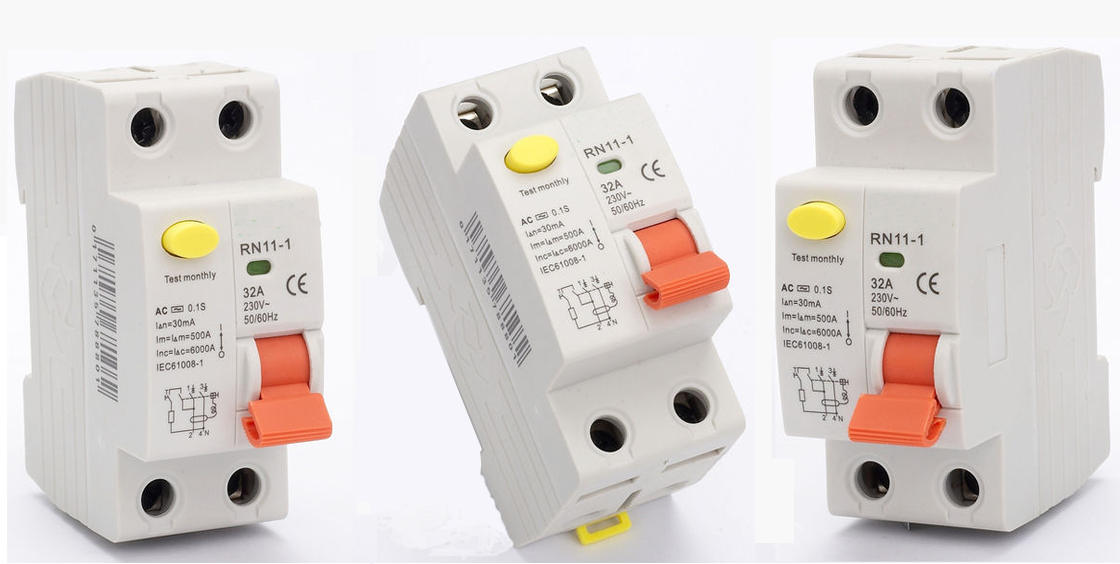
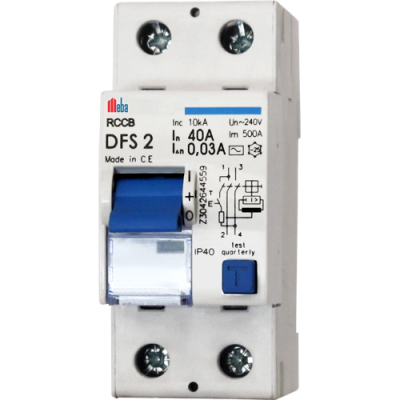
RCCB working principle and function

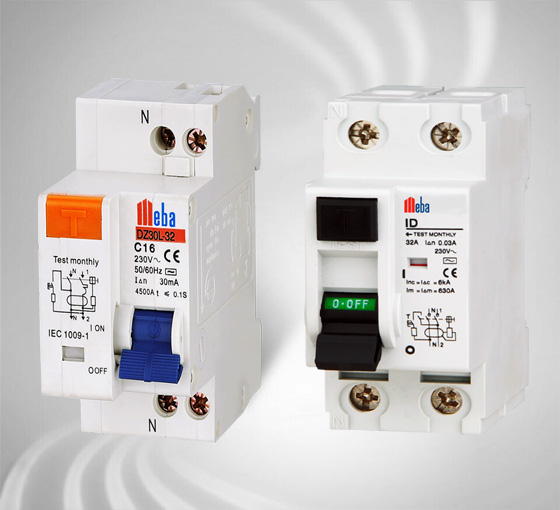
Meba RCCB working principle and function

Circuit breakers are made in varying sizes, from small devices that protect an individual household appliance up to large switchgear designed to protect high voltage circuits feeding an entire city.

We know need rccb match mcb use control home circuit safety, but why we should choose rccb and plat what role in circuit? Now Meba will tell you RCCB working principle and function in circuit.

Principle of operation:

In the event of a short to earth the residual current operating system to prevent shock hazard voltage from remaining on the body of an electrical equipment. For this purpose, the residual current device monitor the difference between the loads flowing through it and ensures that it is aproximately zero. If, as a result of an earth fault, this difference exceeds the circuit breaker’s residual operating current rating ln, then the RCCB will trip and disconnect the circuit of faulty equipment.

Working Feature:

● To open a circuit automatically in the event of an earth leakage between phase and earth and/or neutral and earth. With effective protection against human contact to earth points.
● Protection against Direct Contact of persons or livestock with live part.
● Protection against Indirect Contact of persons or livestock with exposed conductive parts which have become live under fault conditions.
● Protection against Electrical Fires caused by high resistance fault arching but not causing the over current protection device to operate.
● Designed with surge current withstand capability to prevent nuisance tripping during thunderstorms. Conditionally surge current proof (250A, 8/20us), without time delayed tripping.
● These devices are sometimes called an ELCB or RCD.
● Use in domestic, commercial and industrial installations.

Fire protection:

Even relatively insensitive RCCBs (In 300mA) can effectively safeguard against fires caused by earth leakage faults. In the case of residual currents ( 300mA) the electrical energy converted at the location of the earth fault is insufficient to ignite normal building materials. With higher residual currents, the RCCB will shut down in less than 100ms, thereby restricting the amount of energy released to harmless levels.

The use of RCD on 3 phase 3 wires systems:

The MEBA range of 4 pole RCCBs can be used to provide residual current protection of 3 phase, 3 wire circuits (no neutral). Use terminal “1-2, “5-6”, “N-N”, otherwise the RCCB test circuit will not operate.

Selection of Type A RCCB is recommended to ensure compatible safe operation in the presence of pulsating dc components in the circuit. Household products using inverter power conversion technology needs to be protected with Type A RCCB for efficiency.

China to ensure steady economic growth in 2015

BEIJING, Jan. 16 (Xinhua) — Maintaining economic growth is the major task of China’s macroeconomic policies, an official said Friday.

Zhu Zhixin, deputy head of the National Development and Reform Commission, told a news briefing that China was still confronted with increasing difficulties and risks as the global economy was till reeling after the financial crisis.

China has entered a period of slower growth, but maintaining growth within a “proper range” still drives macroeconomic control, Zhu said.

The government set a 7.5 percent target for growth last year. In the first three quarters, the economy expanded by 7.4 percent year on year. Data for the whole year is expected next Tuesday.

Picking the right circuit protection

Picking the right circuit protection Meba

In modern electrical installations, three types of device are commonly used to provide final circuit protection: MCB that provide over-current and short-circuit protection, RCCB that provide earth leakage protection, and RCBO that combine the functions of an MCB and an RCCB in a single device.

RCBOs are being used more widely, but when looking at the characteristics of protection devices it’s easier to start by considering MCBs and RCCBs separately. so How to picking the right circuit protection?

■MCBs are commonly available in versions with Type B, C or D tripping characteristics, the main difference being the ability of the MCB to handle current surges without tripping.

When selecting MCBs, it’s essential to remember that their primary function is to protect cables downstream of the device. Type B and Type C devices can normally be selected to provide tripping times that will give adequate cable protection, but this can be more difficult with Type D devices, which may need a lower loop impedance (Zs) to achieve the tripping time prescribed in the Wiring Regulations.

■Now let’s look at RCCBs, which are also available in various different types that are designated by letters, just like MCBs. This is a potential source of confusion so it’s worth remembering that a Type B MCB, for example, is not related to a Type B RCCB!

But what of Type S RCCBs? These are selective devices intended for use where circuits include more than one RCCB. For example, an installation could include an upstream RCCB to provide protection for several downstream circuits, some of which also have their own RCCB or RCBO. If an earth fault occurs on one of the downstream circuits with an RCCB or RCBO, this device should trip rather than the upstream RCCB. Using a Type S RCCB for the upstream device will provide the necessary selectivity.

■Now let’s turn to RCBOs, standard RCBOs, which are bigger than an ordinary MCB, leading manufacturers are now offering compact RCBOs that save space in consumer units or distribution boards and are easier to wire.

The second development is the recent introduction of RCCBs utilising digital electronic technology, which offer a very wide range of characteristics and are particularly suitable for use in “difficult” applications, such as the protection of circuits supplying large numbers of fluorescent lamps with electronic ballasts.

When choosing individual devices, however, there are many other factors that must be taken into account including the current rating for MCBs and RCBOs, the sensitivity for RCCBs and RCBOs, and the short circuit capacity for all devices.

Additionally, professional suppliers of protection devices, such as Meba Electric Co.,Ltd, are always happy to provide expert advice and guidance.

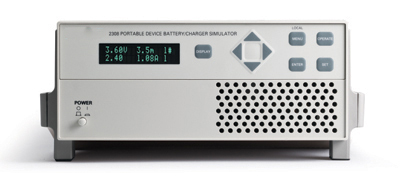
Portable DC power supply

Applicable substations, check protection equipment plant, provide the entire group following the security check power supply, you can test the operation of the relay point voltage and off at different voltage and the operating voltage of the device. DC power plant systems for debugging without affecting the progress of the new substation, power plant commissioning power protection equipment, relay protection equipment.
With aluminum moisture, shock box, easy to carry.
System features:
10A output current protection devices to meet the power needs of the entire set of calibration
Output voltage 10V ~ 250V continuously adjustable, 110V and 220V systems to meet application requirements
Output current limit 0.5A ~ 10A continuously adjustable
LCD display output voltage and current
Output overvoltage protection (after re-power protection needs to start)
Output circuit protection (work after breaking point off)
Over temperature protection (automatic start when the temperature returns to normal)
Technical parameters:
AC input voltage: 220V ± 15%
Output voltage range: 10V ~ 250V (adjustable)
Output current limiting: 0.5A ~ 10A (adjustable)
Regulation accuracy: ≦ ± 0.5%
Steady flow accuracy: ≦ ± 0.5%
Ripple factor: ≦ ± 0.5%
Efficiency: ≧ 94%
Output voltage protection: 255V ± 2V
Dimensions: 340 x 200 x 200mm

China’s GDP grows 7.4% in 2014

BEIJING, Jan. 20 (Xinhua) — China’s GDP grows 7.4% in 2014, in line with market expectations and registering the weakest expansion in 24 years, the National Bureau of Statistics (NBS) said Tuesday.

The reading was slightly below the government target of around 7.5 percent for the year, as authorities are at pains to transform the economy onto a more sustainable track while tackling a housing slowdown, softening domestic demand and weak global recovery.

Last year, the country’s gross domestic product reached 63.65 trillion yuan (10.4 trillion U.S. dollars). Growth in the fourth quarter came in at 7.3 percent, flat with the rate seen in the third.


Difference between ELCB and RCCB

Meba Difference between ELCB and RCCB

Most people are confused about the difference between ELCB and RCCB. Although both are circuit breakers, there are actually key differences between the two that makes them specially made for specific jobs. First, we need understand what the abbreviation stands for. “ELCB” stands for “Earth Leakage Circuit Breakers” while “RCCB” is “Residual Current Circuit Breaker.”

1. Distinguish ELCB and RCCB type, characteristic & function.

▼ ELCB is the old name and often refers to voltage operated devices that are no longer available and it is advised you replace them if you find one.
▼ RCCB or RCD is the new name that specifies current operated (hence the new name to distinguish from voltage operated).
▼ The new RCCB is best because it will detect any earth fault. The voltage type only detects earth faults that flow back through the main earth wire so this is why they stopped being used.

2. The easy way to tell an old voltage operated trip is to look for the main earth wire connected through it.

▼ RCCB will only have the line and neutral connections.
▼ ELCB is working based on Earth leakage current. But RCCB is not having sensing or connectivity of Earth, because fundamentally Phase current is equal to the neutral current in single phase. That’s why RCCB can trip when the both currents are deferent and it withstand up to both the currents are same. Both the neutral and phase currents are different that means current is flowing through the Earth.

3. Finally both are working for same, but the thing is connectivity is difference.

▼ RCD does not necessarily require an earth connection itself (it monitors only the live and neutral).In addition it detects current flows to earth even in equipment without an earth of its own.
▼ This means that an RCD will continue to give shock protection in equipment that has a faulty earth. It is these properties that have made the RCD more popular than its rivals. For example, earth-leakage circuit breakers (ELCBs) were widely used about ten years ago. These devices measured the voltage on the earth conductor; if this voltage was not zero this indicated a current leakage to earth. The problem is that ELCBs need a sound earth connection, as does the equipment it protects. As a result, the use of ELCBs is no longer recommended.

Do less product, so refined products is right way do shop at Amazon

Since 2001, in addition to promote themselves is the biggest online retailer, the Amazon, while the “most customer-centric company” (the world’s most customer-centric company) was established as the goal. Thereafter, to create a customer-centric service-oriented enterprises have become the development direction of the Amazon. To this end, the Amazon since 2001, large-scale promotion of third-party open platform (marketplace), 2002 launch of network services (AWS), 2005 launch of Prime Services, 2007 to third-party vendors to provide outsourced logistics services Fulfillment by Amazon (FBA ), launched in 2010, the predecessor of KDP buffet digital publishing platform digital Text Platform (DTP). Amazon gradual introduction of these services, it’s beyond the scope of online retailers, has become an integrated service provider.

Amazon’s third-party platforms and open quickly attracted a lot of sellers. Then, in the Amazon shop operators and shop in Taobao business any different? With the view of the next bar.

Amazon is a heavy product, platform, light shop, the seller said, operators must learn Shanfanjiujian Amazon store, without reservation, “do less product, so refined products,” the seller for everyone to share the success of Amazon’s character motto. Around doing fine product, the seller believes that it should be good products, then drain.

Weakening shop lies in explosion models

Focus on the Amazon platform operator services business Ltd. Shenzhen Chong Blue magazine founder Larry told C, Amazon is heavy product platform, through this platform, the seller good intentions of the brand, good marketing, business will get better, it does not fit through constantly on the goods to get the orders, for to do fine.

Shenzhen, a foreign trade company boss Lu also said that Amazon is different from other trade platform of one of the biggest feature is the “heavy products, light shop.” Before he settled in the Amazon platform to sell through sales in speed, speed through the practice of selling retail trade and other platforms in its view that a large number of Distribution.

“Most of the time, I pass on the fast selling products Listing even reached 2000, a month down the statistical fact that the product is nothing more than a single 100 number, and that 100 of merchandise a single is relatively average, for each product several or dozens of hard to appear on a single product 300pcs month sales of small explosive product, leaving more than a thousand listing, actually within 30 days of no sales records. “he said.

By contrast, Mr. Lu found a lot of excellent sellers throughout the Amazon store actually only dozens of products, including more frightening is only 10 or so are a few products, but the monthly rate is actually up to hundreds of praise. He explains, “You want to know the Amazon remain assessment rate is very, very low, and this is more to do to verify the Amazon platform must do ’boutique’, you must control the number of single items, like us simply small sellers not so much focus on the product in everything. ”

Mr. Lu said, “do less product, so refined products,” the strategy of the company on the stock to help a lot of busy, ever do AliExpress, eBay time inventory management is very confusing, because there is always the product today, a few single again orders, after a few days another product in stock and also contact the vendor goods, very troublesome.

“Amazon is very easy to do, we have a colleague in charge of inventory and suppliers to control, anyway, ten or twenty products are all directly linked to the factory orders, once were hundreds of thousands from the set, which is not happen that customer orders the goods sent but not embarrassing situation. “Mr. Lu said that.

Because doing fine products, Lu company on order processing speed and quality has been greatly improved, from customer service and after-sales terms, because too many, past sales of some products may not know what is doing with , product very unaware. But now sales are very understand products, because the whole company to do a 20 models of products, daily contact with customers asking if the letter or product compatibility, sales and customer service are able to give a professional answer within a hair station.

In logistics, Lu company to do is to stop the United States, domestic shipments will use E-mail Bao, overseas shipping warehouse on the use of FBA, some specific products go overseas warehouse.

Option selling products, the protection of registered trademarks

Lu’s company to achieve critical blow money by traveling light, to create explosion models that product selection, he shared his experience in product selection.

“We are beginning to select only 10-15 product to operate, these products are our investigation in the Amazon by more popular, are ranked relatively good product on the top seller list. Moreover, the product life cycle can not be short (even if the cycle is too short it is best to have this product substitutes or upgraded versions of the product). If the product life cycle is too short, maybe before that time and energy we had just paid for the product to push the fire, the product itself it was out of the market, which is also very worthwhile. ”

Lu said that done for some time, product sales increased slowly, but Amazon has a “sell now” mechanism that other sellers see this product to sell, as long as they have exactly the same product, the other side can Lu family of products with the listing to sell, share this listing traffic. This gave Mr. Lu brought some problems.

Larry tells C magazine, encountered such a situation, the best seller of the product to register a trademark protected. Lu is doing. Larry said that, with the selling function because Amazon needs to make the platform more concise, customers can find what they want clearer set of products. With new sellers may soon sell to a single, but it can also lead to profits fell because now sell quickly into a vicious competition. Sellers must follow when selling to prevent infringement, once infringement, ranging from a warning, while closed shop.

With a market can foster a more stores

Lu company opened two US sites Amazon seller account, the main one, the store’s monthly sales have exceeded $ 80,000, and the gross margin remained at around 30%.

“Last August, my partner had just time to get involved in this platform is also holding a ‘multi-shop, mad Distribution’ ideas, then there is not much need to think bigger, more shops, more products, and management will be very chaos. I would prefer a shop a 20 models of products, each product can be shipped each month hundreds of pcs, not willing to open a lot of shops, hundreds of product development, in the end every product sold out a few dozen a month pieces, so not much meaning, but doing it boring. of course, I also opened a shop late, reserved for future use. “Mr. Lu said that.

Larry said that Amazon sellers can open more stores, while doing business several stations, for the novice to adapt to different national logistics and language, the beginning will be a little difficult. Chong blue business services based on the US most sellers customers temporarily stop as the main marketing platform, relatively low trading volume and logistics problems.

Focus on the customer experience, some bad comments may be removed

Larry introduction, Amazon is very focused on the customer experience, the seller does not comply with the rules, delayed shipments, product piracy, negative feedback, customer service, etc. aging behavior will be penalized, punished, then, ranging from a warning, while in the closed shop. Therefore, the seller must pay attention to maintaining good credit account.

If the seller meets the following conditions encountered bad review, it can apply to remove the platform: first, the evaluation contains obscene and indecent words. Evaluation contains sellers private information such as email, phone number, full name, Larry said it was not the full name may also appeal is successful, the blue team had a record of successful experience; secondly, all Feedback only for products, there is no mention seller services, such as, “It is not very sharp knife outdoors,” some of these cases can be successful representations, some can not, but if it comes to the seller poor service can not be removed, such as “slow delivery and receipt of goods I noticed the knife was not very sharp. ”

Logistics problems caused by FBA, Amazon seller will not help remove the negative feedback, but it will help sellers Poor crossed, then write his words: This item was fulfilled by Amazon, and we take responsibility for this fulfillment experience.

Note that after the buyer within 60 days of leaving negative feedback, buyers can apply for removal of the negative feedback, Amazon sellers to remove the negative feedback after a successful application, Amazon will notify the parties of the mail, the buyer has the right to once again leave comments, in order to avoid provoking client, Larry recommends applying a few days to go bad review removed.

When leaving negative feedback and sellers to communicate, the seller must be proactive, and buyers seek consensus agreement, let the bad review removed. But some customers will threaten, not how how give negative feedback, which, Larry recommends sellers so direct shots to the Amazon deal. If the seller to provide some benefits to allow customers to eliminate the negative feedback, this approach is found in the Amazon accounts will affect, in serious cases can cause the account to be removed, then the sales rights. At this time, Larry recommends write an email to the seller of the Amazon, admit mistakes, sincere tone of voice mail, do ensure that you do not easily allow Amazon to allow Amazon to believe that you will correct, Amazon will give you one more chance in general, recovery account sales rights.

Larry provides a way to remove bad review: First, click on the Contact Seller Support; the second step, find the Order column, select Customer Feedback Problem; The third step is to submit an application in accordance with the requirements of the content and submit.

Please help a foreigner to write product description

Lu said that a generation of orders is determined by two questions: First, how to make the products are buyers see? Second, buyers see why after a certain product from your home purchase rather than the other home. These two problems are solved, the order came naturally.

For the first question, the seller needs to consider many issues, such as the search for the right to the Amazon platform heavy demand for the product market is large enough, the station promotions, promotion and so outside the station. Lu’s approach is to first solve the product quality, and then through some promotion methods to allow customers to see the product.

“Because before we have an experience: a product sales can be, but the quality is unsatisfactory, in the end, this product every day to sell a lot, but it is to bring more returns and refunds customer pressure. to solve this problem, our product quality up and down a lot of effort, before some products are getting goods to market, and now we have to make factory direct production according to our standards, then trust your own branded trademark LOGO enhance customer degree. ”

Promotion, the company’s pre-Lu will do PPC PPC products, promotional activities through the station as well as with non-infringement sell some products to achieve the effect of drainage. Another e-mail to remind customers to stay praise, praise phoned stay off buyers write Product Review, send samples to write product reviews and other professionals, is also a good way to promote.

For the second question, Lu believes more customers through a variety of ways, if you have entered into the product page is the title of the most intuitive, pictures, detailed descriptions. Lu’s approach is heavy detail, these things will be extreme.

“Product pictures are your professional photography experts and artists for processing (because online shopping can not see the kind of customers, can only be understood through the pictures appearance, the appearance is in addition to the most attractive elements of customer), and then the title keyword optimization even describe, we’ve written to make their sales, marketing written in English always felt a little stiff, does not meet foreigners reading experience, we directly to foreign friends or clients to write personally feel this is more in line with foreign buyers tastes. ”

Larry adds, generally Amazon seller on the product is the picture editor, title and text description, the seller can be inserted only senior picture description. As for promotion, the main station and the station or outside sales, inside the station, including PPC pay per click marketing, product promotion, a blue VIP program will involve training courses, there is a special group, and on-site promotion is well done. Sellers if they operate well, you can find foreign aid.

Give Yourself Space to Think

Too much busyness keeps us from becoming who we might have become, had we given ourselves the space. This is a tricky reality for modern enterprises and the people tasked with strategic thinking within them.

My area of specialty is collaborative business culture. I am a strategic advisor to senior executives at some of the world’s biggest companies, many of which are in a state of transformation.

Culture is a complex issue. While every organization faces its own challenges, I can share a few that are common to most senior executives within enterprises in the midst of a modern transformation.

Strategists Need Time to Think

Chaos will always be easier than simplicity to achieve, and as a result, we will often feel frazzled, with our backs against the wall. But if you are in charge of strategy within your organization, you need to give yourself time to concentrate. Period. If you aren’t regularly scheduling blocks of time to focus and allow your brain to play out various future scenarios, then you’re just toggling back and forth and losing the opportunity to live up to your full potential as a strategist.

The Corner Office Fantasy

Someone once told me that in the military, as soon as someone has a star on his shoulder, he starts managing his career and loses sight of the organization’s goals. I don’t have military experience, but I understand what he meant. It’s like the old corner office fantasy, and the steps once taken to get there. In an enterprise, as budgets shift and shrink, those who can balance their own short term perspectives, frustrations and ambitions against the long term health of the organization are the most valuable leaders.

The path now has changed, and the ones who get ahead now are those who see new opportunities in new dynamics. Advancement has shape-shifted. The new leaders are energetic, visionary, and not afraid to take risks on their way to the top.

Seeing the Big Picture

The complexity of some of the world’s biggest companies is staggering, and in the past, the sheer scope of so many moving parts required silos. That’s changing now, thanks in large part to creative thinkers and great algorithms. This new dynamic has created the crushing need for a matching mindset shift on the same scale. This isn’t easy, and it requires trust.

Trust

Lots of teams claim to have it, few do. Trust is a hard concept to nail down. What does it mean, really? That you believe someone will do what you’d like them to do, and when they don’t, they’ve violated your belief in them? No. Trust means that you believe in someone else’s ability and strength. With things changing so quickly, no one person knows or understands everything. Many large companies are now focused on learning to take risks, which is an unusual leap for many big enterprises accustomed to moving at a slow pace. It’s important to cultivate a level of trust that gives team members at the most senior level the sense that they have space to explore this new mindset, and to rely on each other’s strengths as they go.

I don’t mean to suggest that putting these concepts into practice is easy–but it is necessary. And when you’re at your busiest, surprise yourself by giving yourself space to think, to walk on the beach and find empty chairs that seem as if they were put there just for you to stop, catch your breath and let an idea arise. It just might be the thing that changes your team’s focus for the better, contributes to the big picture, and justifies all the trust your colleagues have in your abilities.

__________________________________________________________________

Rita J King is the EVP for Business Development at Science House, a cathedral of the imagination in Manhattan focused on the art and science of doing business. She is a strategist who specializes in the development of collaborative culture by making organizational culture visible so it can be measured and transformed. She is a senior advisor to The Culture Institute in Zurich, Switzerland, and a Fellow at the Salzburg Global Forum. She makes Mystery Jars, writes about the future for Fast Company and invents story architecture, characters and novel technologies for film and TV as a futurist for the Science and Entertainment Exchange.

Al-Qaeda’s Likely Strategy, and Why It May Work

Now that the shock over the terrorist massacre at the French satirical magazine has begun to subside, a school of thought is emerging as to the real motivations behind the brutal attack.

One of the gunmen reportedly declared they were acting on behalf of al-Qaeda in Yemen, an offshoot of the terrorist organization behind the 9/11 attacks in the United States. If indeed this was a calculated action, rather than an expression of outrage at the magazine’s provocative cartoons, what was the group trying to accomplish?

Christopher Dickey of the Daily Beast, speaking on the public radio program On Point, and Juan Cole expressed similar views regarding that key question. They strongly suspect the group’s goal is to drive up anti-Muslim prejudice in Europe, which will in turn isolate and ultimately radicalize European Muslims.

Cole put it this way: “Al Qaeda wants to mentally colonize French Muslims, but faces a wall of disinterest. But if it can get non-Muslim French to be beastly to ethnic Muslims on the grounds that they are Muslims, it can start creating a common political identity around grievance against discrimination.”
Humans buffer their fear of mortality by attempting to transcend death, either literally (via belief in an afterlife) or symbolically (by devoting your life to a larger cause that will live on).

Early reports of attacks against French mosques provide preliminary evidence that this dynamic has already been set in motion. What’s more, two recent research reports suggest the strategy may be as viable as it is vile.

One finds that anti-Muslim prejudice is already quite strong in Europe. In a 2007 paper published in the journal Social Science Research, Norwegian researchers analyzed data from the 1999-2000 wave of the European Values Study.

They concluded that “prejudice against Muslims was more widespread than prejudice against other immigrants,” adding that “Muslims in Europe were particularly prone to becoming targets of prejudice, even before the attacks of September 11.” Clearly, if you’re trying to provoke increased antagonism against Muslims, Europe is fertile ground.

The other helps explain the psychological mechanism that heightens the prejudices of people who are frightened of terrorism. It’s known as Terror Management Theory.

According to this school of thought, which is based on the seminal ideas of anthropologist Ernest Becker, humans buffer their fear of mortality by attempting to transcend death, either literally (via belief in an afterlife) or symbolically (by devoting your life to a larger cause that will live on).

One often-problematic result is that, after being reminded of their mortality, people tend to cling more tightly to the ideas and associations that give their lives symbolic meaning. This can prompt an aversion to nuance and ambiguity in favor of unthinking allegiance to their religion or country. For many, increased prejudice against those who derive their meaning from different sources (such as another faith) follows naturally.

A team of scholars led by Emily Das happened to be doing research on this phenomenon in the Netherlands when Dutch filmmaker Theo van Gogh was murdered in Amsterdam by an Islamic extremist in November 2004. This tragedy provided the researchers with a unique opportunity, as they could measure responses of non-Muslims in the Netherlands before and after the news broke.

“Consistent with Terror Management Theory, terrorism news and Van Gogh’s murder increased death-related thoughts,” they reported in a 2009 study published in the Journal of Experimental Social Psychology. “Death-related thoughts, in turn, led to more prejudiced attitudes towards Arabs, but only after Van Gogh’s murder. The Van Gogh murder primed unconscious death anxiety, which, in turn, became ‘attached’ to attitudes toward Arabs. Van Gogh’s murder triggered a fear-based judgment of the Arab population, with high levels of unconscious fear predicting higher prejudice against Arabs.”

Das and her colleagues describe this dynamic as “inadvertent.” But in the current case, it’s quite possible that it was all part of the plan. And it may very well work.

Let’s Learn More About The Distribution Board!

A distribution board (also known as panelboard or breaker panel) is a component of an electricity supply system which divides an electrical power feed into subsidiary circuits, while providing a protective fuse or circuit breaker for each circuit, in a common enclosure. Normally, a main switch, and in recent boards, one or more residual-current devices (RCD) or residual current breakers with overcurrent protection (RCBO), are also incorporated.

Distribution boards are also referred to as a:

  • breaker panel
  • circuit breaker panel
  • consumer unit, or CU
  • electrical panel
  • fuseboard
  • electric board
  • fusebox
  • breaker box
  • load centre/center
  • panelboard
  • power breaker
  • service panel
  • DB board (South Africa)
  • ACDB (alternating current distribution board)
  • DCDB (direct current distribution board)For reasons of aesthetics and security, circuit breaker panels are often placed in out-of-the-way closets, attics, garages, or basements, but sometimes they are also featured as part of the aesthetic elements of a building (as an art installation, for example) or where they can be easily accessed. However, current US building codes prohibit installing a panel in a bathroom (or similar room), in closets intended for clothing, or where there is insufficient space for a worker to access it. Specific situations, such as an installation outdoors, in a hazardous environment, or in other out-of-the-ordinary locations may require specialized equipment and more stringent installation practices.Large buildings or facilities with higher electric power demand may have multiple circuit breaker panels. Outlets may be labeled with the panel number and circuit number to allow quick identification of the source for maintenance.

    Distribution boards may be designated for three-phase or single-phase and normal power or emergency power, or designated by use such as distribution panels for supplying other panels, lighting panels for lights, power panels for equipment and receptacles and special uses. Panels are located throughout the building in electric closets serving a section of the building.

    In a theatre a specialty panel called a dimmer rack is used to feed stage lighting instruments. A US style dimmer rack has a 208Y/120 volt 3-phase feed. Instead of just circuit breakers, the rack has a solid state electronic dimmer with its own circuit breaker for each stage circuit. This is known as a dimmer-per-circuit arrangement. The dimmers are equally divided across the three incoming phases. In a 96 dimmer rack, there are 32 dimmers on phase A, 32 dimmers on phase B, and 32 on phase C to spread out the lighting load as equally as possible. In addition to the power feed from the supply transformer in the building, a control cable from the lighting desk carries information to the dimmers in a control protocol such as DMX-512. The information includes lighting level information for each channel, by which it controls which dimmer circuits come up and go out during the lighting changes of the show (light cues), and over what fade time.

    Distribution boards may be surface-mounted on a wall or may be sunk into the wall. The former arrangement allows for easier alteration or addition to wiring at a later date, but the latter arrangement may look neater, particularly in a residential situation. The other problem with recessing a distribution board into a wall is that if the wall is solid a lot of brick or block may need to be removed – for this reason recessed boards are generally only fitted on new-build projects when the required space can be built into the wall.

Difference Between MCB and MCCB

Meba-MCCB-and-MCB

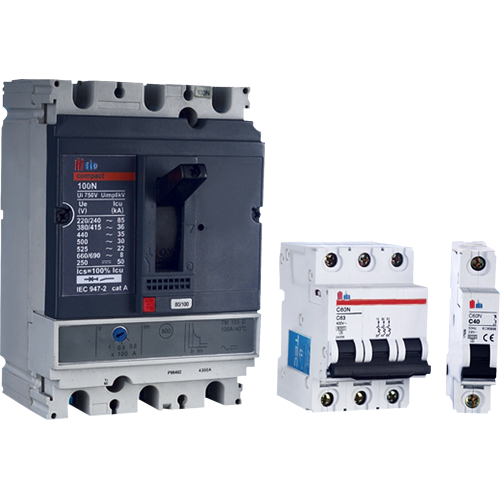
Most people are confused about the difference between MCB and MCCB. Although both are circuit breakers, there are actually key differences between the two that makes them specially made for specific jobs. First, we need understand what the abbreviation stands for. “MCB” stands for “Miniature Circuit Breakers” while “MCCB” is “Molded Case Circuit Breaker.”

◆The main difference between the two is their capacity with the MCB rated under 100 amps with an interrupting rating of under 1600 amps. Consequently, their trip characteristics may not be adjusted since they basically cater to low circuits.

◆On the other hand, an MCCB comes with an adjustable trip characteristic for the higher models. Usually, this type of circuit breaker would provide amps as high as 1,600 or as low as 10 depending on what is necessary. Their interrupting rating can be around 10,000 amps to 200,000 amps.

◆Judging from their power capacities, the MCB is mainly used for low-energy requirements like home wiring or small electronic circuits. On the other hand, the MCCB is more suited in providing energy for high-power equipment.

◆When choosing between using an MCB and an MCCB, it is important to consider the amount of power that would be coursing through the device. As mentioned above, MCCB is more suited for higher energy because of its better capacity. Of course, when it comes to home use, the MCB is usually the circuit breaker of choice. For heavier power requirements that go beyond the 1,600 amps ceiling of the MCCB, medium or high-voltage circuit breakers would be the next best possible choices.

Summary:
1.An MCB max100 amps while an MCCB goes as high as 1600 amps.
2.MCBs breaking capacity max 6KA, MCCB up to 36KA
3.MCBs are mostly installed for home use while an MCCB is generally utilized for commercial or industrial purposes.
4.Both are low-voltage circuit breakers created to respond to IEC 947 standards.
5.Some MCCB units are specially made to respond to remote control signals usually as standby power.
6.Circuit breakers are installed for safety reasons.
7.The location of circuit breakers in every structure should be known to the people who reside in it.

Management of Leakage Circuit Breakers

This paper combines the rules and characteristics of China’s rural electric shock, proposed rural power low-voltage safety protection should be used, and focuses on the quality of leakage protection measures to track and enhance operational management.

Keywords leakage protection configuration tracking the quality of operation and management

After the transformation of rural power grids, the management of the county department of rural low-voltage electrical power grid extends to household energy meter, safety problems they face, mainly in rural areas of personal injury and electric shock accident burn household appliances. How to improve the level of security of electricity in rural areas to a new level, is an important research topic is urgently needed.

A rural electric shock regularity and characteristics

Learned from years of operating experience, regular electric shock mainly in the following aspects:

1.1 in rural areas than in urban electric shock

Although the level of security of electricity increased year by year, to electrocution accident rate is still much higher than the world’s developed economies. Electric shock accident occurred mainly in rural areas, rural electric shock is the city’s six times. The main reason is: poor rural electricity, electrical equipment and the installation is not reasonable simple, low level of technology, management is not strict, farmers lack knowledge of electrical safety.

1.2 low-voltage electric shock than the high-pressure electric shock

It is not easy to contact high voltage grid; low-voltage network coverage, electrical equipment and more, so also many opportunities for people to touch; coupled with inadequate facilities, poor management, people thought paralysis, lack of knowledge of electrical safety personnel the opportunity to contact more.

1.3 electric shock seasonal

Every year from June to September is the electric shock of high season, mainly due to summer and autumn rainy and humid, electrical equipment insulation degradation; the hot weather, most people do not like to wear clothes and use insulated protective gear, and the body sweating, skin resistance decline. In addition, a time when the busy season, rural electricity consumption increases, people contact and operation of electrical equipment the opportunity to significantly increase the adverse conditions, coupled with careless subjective, has become highly concentrated electric shock season.

Electric shock 1.4 point multiple sites

Single-phase electric shock more than two phases (refers to the relative phase) electric shock, and the accident point occurred in the branch line, then the family line, climb wire, connectors, lamp, plugs and sockets, electrical switches, electrical controls, fuses, etc. . These are the people easily accessible location, but also prone to short circuit, grounding and leakage.

Rural electric shock reasons 1.5

1.5.1 Equipment failure

Low voltage overhead line is too low, on the ground height, distance from the building does not meet code requirements; Low pole cable fixed position is unreasonable, bad process, nor standoff insulators; with scrap wire or wire for wire; connector failure; electrical equipment metal ungrounded or poorly grounded; wire breakage or aging insulating layer as into the family line or electrical wire; broadcast lines and power lines installation distance does not meet the requirements resulting from each other take even; screw caps and bulb does not meet the standard requirements, and the zero line, phase lines are wrong, so that the bulb exposed metal screw charged; wrong-way switch connected to the zero line, so long live the lamp and so on.

1.5.2 Equipment disrepair

Then family line, lead to aging or damaged insulation; pole cable corrosion, lead off shares and aging joints, causing the break down lever; electrical damp, insulation aging; protect ground or zero line shell is broken; rubber insulated wire guard sets, flexible cable sheathing and insulation breakdown, flexible cable connector insulation wrap improper selection or loose material off; open load switch (plastic cover gates), lamp and socket insulation shields, etc. cover lost or broken.

1.5.3 Illegal operations

Lap live power lines or repair electrical equipment; not cut off the power, live mobile leakage fault electrical equipment; overhead line below or lifting equipment nor the security building measures; while the power supply of the machine, without authorization to work in the power equipment; violation of safety regulations, were parked around the isochronous transmission.

1.5.4 Private pull random access, illegal use of electricity

A line attached to lighting; directly linked with a wire hook overhead power lines; kangaroo grid electric fish, electric rat; hauled climb with old wire line down the middle lines.

1.5.5 lack of knowledge of safe use of electricity

Mired bare live wires falling off, bare drag electric shock; the three-hole or four-hole plugs, sockets very misconnection protection in phase line, causing the electrical equipment enclosure charged; Gordon climb poles or transformers; arbitrarily put the knife switch the ground running; non-insulating material wrapped wire connectors or breakage; the plug with a wire directly connected to the power line; damp places safe voltage electricity is not used; freely operate energized equipment.

1.5.6 do not install or use inferior leakage protector leakage protector

Agricultural Improvement former home security installation rate is very low leakage current is generally larger rural power circuit used current-total security mistakenly much action, and the action leakage current setting value is too large to protect the personal safety. Agricultural Improvement home security after installation, although the rate of increase may be a lot of fake and shoddy products into the rural power network, rural electric shock casualties continue to occur.

1.6 rural overhead lines, then the family line, temporary power line electrocution accident

According to statistical data analysis, overhead lines in rural areas, then the family line, electric shock accident occurred on a temporary power lines as high as 70%. In many factors in electric shock, electrocution accident caused by only one factor less than 10%, with more than 90 percent of electric shock is composed of two or more factors. Therefore, strengthening education management and electrical safety electrical safety knowledge is very important.

It should be noted that in the rural power before and after rectification, the law may change with electric shock. We should be in practice, constantly analyze and summarize its laws, to provide a reliable basis for the development and improvement of safety measures to improve security of electricity.

2 leakage protection configuration and selection

We should combine the status of rural low-voltage grid, it is necessary to achieve the safe protection work, reduce electric shock, but also improve the reliability of the power grid, which is a comprehensive requirements for the protection of the proposed cut leakage. Facts have proved that: the use of hierarchical protection leakage protection is the fundamental way to achieve these requirements, but also the inevitable trend of development of leakage protection. According to our low-voltage power supply grid, economic conditions and production leakage protection, etc., the use of low-voltage power grid in bipolar leakage protection approach is feasible, and it is most effective.

First, should increase the final stage of the installation rate of leakage protection and put into operation rate, the last stage shock protection to prevent direct contact with the main objective to protect their small plane, does not interfere with other users. Urban and rural families into the family line of contact and the widespread use of portable electrical equipment, power tools, etc. should be the choice of the rated residual operating current is less than 30mA of high sensitivity, fast leakage protector. For single-phase electricity customers should choose the leakage protection with over-voltage protection function, when used to prevent the emergence of the total three-phase four-wire neutral wire is disconnected and then family miswired into 380V line voltage, resulting in abnormal overvoltage damage appliances. The best selection with leakage, overvoltage, overload protection and short circuit protection, so that all the anomalies of single-phase electricity customers can be protected. To cause secondary injury after a shock sites, such as aerial work or electrical equipment used in the river bank, can be installed leakage current for fast leakage protector of 10mA.

The second level of protection for total protection or branch protection systems. This level of protection can be installed in each branch or head-end line of low-voltage distribution transformers at the outlet, its scope of protection for the trunk (or branch line) low-voltage grid, under the family line and into the family line, but also as an end backup protection level of leakage protection. Rated residual operating current should be determined according to the protected line and the actual leakage current equipment.

This two-stage trigger leakage protection constitutes a leakage protection network classification, first-class protection against the harsh conditions and some of the higher risk of electric shock provides protection where direct contact; a second level of protection is to expand the coverage of leakage protection, improve the overall safety level of low-voltage grid. Between the two levels of protection should be reasonably fit, its leakage current and operating time should be differential. Proposed to consider the higher rated leakage protection leakage current of 2.5 to 3.0 times the rated leakage current to the next level, the level of leakage protection operating time of the lower level of a movement to increase the operating time differential, around about 0.1 ~ 0.2s .

3 leakage protection quality tracking

Leakage protection as a national mandatory implementation of safety certification of electrical products, its quality is directly related to the merits of the user’s life and property safety, for quality of leakage protection has been a problem of concern to the user. Especially the rural network “two reform” since the work carried out, the surge in demand for leakage protection, stability of many quality, good performance, full-featured extensive leakage protection chosen by the user, but there are a lot of poor quality agricultural products into the net. Hence the need to strengthen and carry out supervision of the quality of leakage protection, dynamic management, improve the quality of consciousness production operators to prevent substandard and counterfeit products into the low-voltage grid. Now how to strengthen and standardize the conduct some suggestions on the quality of regulatory leakage protection:

(A) insist on the implementation of safety leakage protection conformity certification, mandatory supervision and management is to ensure the quality of the premise and foundation. From a few years to track the quality has made the security situation on the certificate of conformity of the product, the stability of product quality was better than not been certified products, indicating that qualified to carry out safety certification for the future quality of the product has an important role .

(2) to carry out leakage protection quality tracking and supervision is effective measures to promote and ensure product quality. Carry out leakage protection is to track the quality of supervision and implementation of dynamic regulation of its quality, and thus judge its quality status, therefore, leakage protection quality tracking and supervision is carried out on the quality of regulatory leakage protection key areas. Leakage protection for tracking the quality of the main aspects of work should do the following:

1) quality assurance oversight bodies sampling track testing and technical assessment authority. Verification testing capabilities to track the quality and reliability of the assessment of supervisory authority is qualified, will directly affect its accuracy in tracking product quality assessment, therefore, to ensure the quality supervision authority is to carry out a key quality tracking supervision.

2) further increase the quality of supervision of certified products tracking efforts, quality tracking supervision should adhere to the “Three” (fair, just and open), “three unification” (unified supervision standards, unified supervision approach, unified test items) principle, quality assurance tracking supervision seriousness. Supervision must be conducted with strict quality tracking and standardized work procedures, relevant information to track the quality of products and clear conditions to participate and businesses should provide open standards and technology assessment principles leakage project protection quality tracking test and used to announce sampling approaches and quantity. Such as Zhejiang Province leakage protection quality tracking test has been carried out for many years; Henan Province since 1999, first recommended to the provincial bureau grassroots counties user based on usage, commissioned by the provincial bureau review after testing organizations test qualification. Provinces ongoing quality tracking tests were conducted according to national standards, the selected item highlighted the main features of leakage protection.

3) timely disclosure of product quality testing, the detection of the products for their quality improvements are an important part of the quality of tracking supervision.

4) to detect the presence of defects in the quality of products, quality improvement after making periodic retesting is tracking supervision is another important part of the quality. It is to promote the products of the manufacturers of quality defects effective measures to improve product quality, but also reflects the manufacturer’s production, technology and quality management. Such as the existence of quality defects, Zhejiang Province of detection products, improvements in the quality of the proposed 3 to 6 months after a random sample retested and re-examination of the case published quality.

(3) enhance the legal concept, adhere to the use of legal conduct quality control, leakage protection is also an important way to ensure quality.

Enhance and improve the legal awareness of quality control department and production operators is to carry out legalization, the foundation and prerequisite for the standardization of Quality Supervision, which is directly related to the quality of supervision can make the law, whether to use legal means to protect the reputation and the use of qualified products owner’s equity, therefore, insist on relying on the quality of regulatory laws to promote product quality has a very effective role. Quality supervision departments to remind and warn the user preferred brand of qualified products to protect qualified production enterprises, while preventing and combating counterfeit products. In addition, the quality of leakage protection and legal responsibilities and linked, such as the forthcoming local regulations, Zhejiang Province “Zhejiang physical shock compensation approach”, it has been clear to endanger the safety of electrical products business will legal liability, leakage protection is one of them suggested that the state should put the appropriate regulations.

(4) enhance the quality and timely feedback, and increase investment in science and technology is an important means to enhance and ensure the quality of products.

Quality control department and using the administrative departments should strengthen the already put into operation the leakage protection monitoring quality of service and business surveys and feedback, timely leakage protection operation and the quality of feedback to producers. Actively support and encourage enterprises and research institutions to develop new products, and constantly improve the leakage protection function.

(5) recommended the establishment of the National Association of leakage protection, and specify the test conditions have to enter the rural power unit leakage protection manufacturer’s product sampling test every year, and announced the recommended manufacturer and product type, product quality, price, service and other comprehensive supervision is necessary to prevent counterfeiting, and shoddy products into the rural network, but also against unfair competition from low-price, low quality.

4 leakage protection operation management

To install leakage protection due to play a protective effect, it is necessary to strengthen the operation and management of the grid, the power sector at all levels should pay attention to this work. Especially in the rural power during and after the rectification, maintenance and management of the county department of electrical household meter to farmers, prompting them to relevant safety issues must vigorously strengthen management. Below the provincial electricity sector at all levels, including the township (town) powered by, should be equipped with special (and) the security personnel on the grid and leakage protection management. The use of units in the selection of a particular product, deal with the product’s features and performance testing prior to use, and only after functional performance testing of products before they allow the installation to the scene. Each county departments should be equipped with the necessary power test equipment and qualified professionals to ensure the implementation of this measure. At the same time should be set up or slice up a separate leakage protection maintenance, to ensure that the damaged leakage protection can be repaired in a timely manner. County and township power sector should periodically sampling leakage protection operation. End-stage leakage protection assets belong to the user, the power sector has a responsibility to promote, guide, inspect, supervise its installation and accelerate the popularity, to ensure the quality, ease of management, conditions can be unified procurement, installation, with household filing. The total leakage protection is the power sector assets should be used and put into operation rate, with the final stage of protection can reasonably meet the total leakage (branch) protector. Each total leakage protection device installed and put into operation, the responsible person should run clear, with a trial jump run record, commissioning test cases recorded correctly, try to jump on a regular basis, the operation of the trip, the recovery time of transmission, the cause and abnormal and so on. County and township-powered electricity sector should be equipped to leakage protection performance of field test instruments, the organization of rural electrician training. Township powered by organizations with annual actual station area and drain leakage current overall protection performance once the field test, make a record, evaluation, in order to ensure the total leakage protection is in good condition.

Leakage protection for installation, operation, each county under the jurisdiction of the power sector to respond powered by township and users make the following provisions:

(1) requires each unit of electricity by households and leakage protection required to be installed, otherwise it will not supply.

(2) Where the newly installed leakage protection must meet national standards, national certification mark, its technical parameters can be protected equipments. Shall purchase and install substandard products.

(3) leakage protection tripping coincide unsuccessful, the reasons must be identified before delivery after the elimination of fault current, are not allowed to force transmission, not energized unprotected state.

(4) No person shall use any excuse to dismantle the unauthorized leakage protection or out of operation, or not powered by the removal of those responsible for all the consequences.

(5) For the breach caused personal injury, equipment damage who, depending on the seriousness of the case, were given criticism and education, punishment until the criminal prosecution.

Installation of leakage protection, run the following information should be required to collect, aggregate, save and reporting:

(1) powered by township should establish total leakage protection ledger, the final stage leakage protection statistics and ensure consistent with the scene. Six months or a year, once aggregated, summarized subjects should include: each station area with variable number of units, the number of lines of low pressure, leakage protection units installed and put into operation the number, type, manufacturer, date of manufacture, the township, the total leakage protection installation rate, replace damaged several units, the number of new units, the final stage leakage protection the number of units and installation rate. A summary table at the county level power sector, a long-term storage on file.

(2) powered by township monthly total protection to deal with leakage test run and jump record summary. Subjects summary should include: various models leakage protection units total number of trips and the number of permanent failure, the cause classifying, summarizing record twelve months in a year will be aggregated, summarized in a report the county the power sector, a stay stalls long-term preservation.

(3) powered by the township to annual total leakage protection performance test records a summary, summary subjects should include: various models of the total leakage protection device rated residual non-operating current substandard number of units, the number of units operating current exceeding the rated residual operating current operating time exceeded the number of units under, phase amplitude type of action should be to increase the rated current of electric shock is not unqualified number of units, the operating time under rated operating current shock exceeded the number of units, number of units, such as blocking function failed. Field notes generally kept for three years, in order to facilitate comparison of before and after. A summary report on the county the power sector, a stay-speed long-term preservation.

(4) Upon receipt of the county and township in the power sector should also report summary report municipal electricity sector, municipal power sector should receive a summary report at the provincial bureau reports the county, provincial, city and county should lower the long-term preservation News reports and summary tables come. Thus, to fully grasp the power sector at all levels of leakage protection status, operations analysis and problems, provide a reliable basis for decisions of higher authorities.

In addition, when leakage protection within the scope of protection of human casualties, the former accident investigation should protect the scene, not dismantled leakage protection. Electricity leakage protection departments should check the performance conditions and the implementation of regulations, such as leakage protection features, performance is normal, can not ignore the existence of leakage protection dead zone, such as phase and phase by phase zero occasionally shock possible. In order to improve the leakage protection of personal electric shock protection security, while ensuring the reliability of supply, leakage protection in addition to strengthening the management itself, the need to strengthen the management of low-voltage power grid, so as to enable the transformation of rural power equipment levels and after security level there is a qualitative leap.


How to test a bad circuit breaker

When home electrical systems had fuses, a person could determine if the fuse was in need of replacement with a visual inspection. Today, electrical panels have circuit breakers, which can be reset easily after a problem. But even circuit breakers can wear out over time. After the breaker has been tripped many times, it can become unreliable. When this happens, the breaker may need to be replaced, and determining whether or not one is bad involves more than just a visual inspection.

Instructions

  • 1

    Locate the main electrical panel for the home. The panel is usually located close to where the electric line enters the house from the meter. If you notice any bare wires outside the electrical panel, a qualified electrician should be called to remedy the situation.

  • 2

    Locate the breaker in the panel for the circuit that is having a problem. If the breakers are not labeled, you may need to turn breakers on and off and observe which circuits are controlled by which breakers. Ensure that no one in the household is using a computer, which may suffer damage if it is suddenly without power. Also ensure that any other electrical item is taken into consideration before disrupting its power. A household may have medical devices that should not be without power.

  • 3

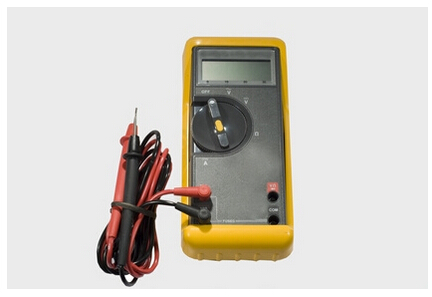
    Set the multimeter to Volts AC. Ensure that the battery in the multimeter has a charge by testing an electrical outlet you know to be working.

  • 4

    Touch one prong of the multimeter to the breaker’s terminal screw and the other prong to a ground. If the needle on the multimeter does not register that there is any power in the breaker, it is probably bad and needs replaced. Ensure that you do not touch any part of the panel with your bare hand except the switches of the breakers.

How to effectively distinguish the quality of MCCB good and bad?

Distinguish-the-quality-of-MCCB-Meba

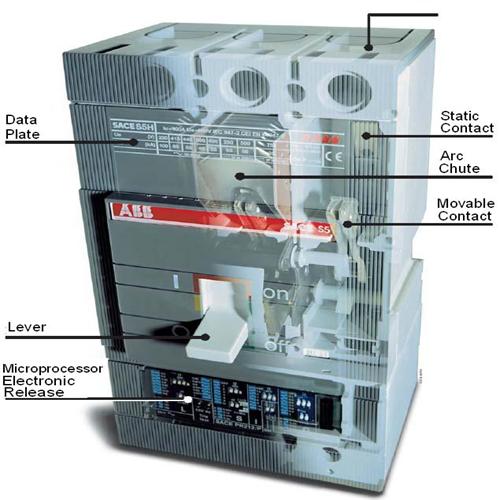
MCCB this product, I believe most people are not familiar with it, but very few friends can discern differences in the quality of molded case circuit breakers. I believe many of my friends use the MCCB will often appear many faults, primarily reason is did not choose a good quality MCCB caused. So how to effectively distinguish the quality of mccb good and bad? Do not worry, Meba Electric will teach you a trick, as long as they could use well can selection a excellent quality molded case circuit breakers.

We all know that there are kinds of molded case circuit breakers in the market, product quality is uneven. If not distinguish very easy to buy substandard quality MCCB, so how to distinguish before buying?

◆Meba Electric teach you a trick is to look at the molded case circuit breakers contacts, the best quality contacts is silver contacts, followed alloy contacts. As we all know the price of silver is not cheap, MCCB real use silver contacts, the price is expensive, so the market price gap is very big. Of course, some manufacturers in order to benefit, which uses composite silver or silver-plated, such an approach will have an impact on product quality.

◆Use silver contacts MCCB majority are very good quality, of course, in order to avoid to choose is used in composite silver or silver-plated MCCB, we also need to be a trick, that is to be distinguish MCCB contacts.

◆When we open the lid of the circuit breaker, get Arc Chute, you can clearly see that the static contact of the MCCB. Both the?alloy contact?or?composite?silver contact will?cross on?a layer of silver,?so?we couldn’t distinguish?the breaker contact?is?what?material, but we can use a sharp tool to draw the contact surface.

◆If it is alloy contact will soon see bottom color is the copper colored, otherwise it is a composite silver contacts still unable distinguish.Then we should scratch from the side surface of the contact side, when we remove the surface of silver can be seen that there are two layers of different materials, white metal is silver, copper as copper base.If it is silver contacts from top to bottom is a silver white, if not that is a former two.

How does a Circuit Breaker get damaged?

  • All circuit breakers have the same basic internal and external construction. They all must meet certain construction criteria before they can be sold in the U.S. market place.

The Basic Construction of a Circuit Breaker

  • All circuit breakers are enclosed in a very high impact, yet brittle plastic. This plastic is made to withstand high temperatures and insulate high voltages in the 50,000 volt range and higher. The high voltage range is in case your circuit breaker box may take a direct lightening hit. Although the plastic can withstand a high impact hit, it is made to break on the corners so the internal workings does not sustain damage. The internal circuit breaker workings are that of a spring operation, that opens when a piece of conductive metal becomes too hot from over current and weakens to release a trip spring. This trip spring opens a switch. The switch cannot be reset until the conductive metal cools down.

Damage by Over Current

  • Circuit breakers are manufactured to open whenever an over current situation occurs. Whether it is from a direct, short to ground or a device failure of high amperage. Repetitive over current or constant tripping can severely weaken the conductive metal and finally break the small metal piece. The spring can also weaken and loose its capability to be reset. In this case, the entire breaker must be replaced.

Damage by Constant Use

  • Circuit breakers should never be used as the on/off switch in any circuit. Constant on/off use will cause the reset spring to become weak and may create a fault that is not recognizable by a tripped switch. Or worse yet, it may not allow the circuit breaker to trip at all and cause a complete and literal melt down of the wiring circuit.

Damage by Impact

  • Accidentally dropping a circuit breaker on a hard surface such as metal or concrete will pretty much destroy the internal device. Although it may appear to operate fine, there is a great possibility that the spring or conductive metal is damaged. You can never open up a circuit breaker and repair it; it is not worth the risk at any cost.

Damage by Lightening

  • Circuit breakers are constructed to wit stand a very high voltage, but sometimes a lightening strike may be too much for the internal circuit. A back flow of electricity can also damage the internal works if lightening hits an outdoor fixture and the electricity from the lightening bolt attempts to travel back to the circuit breaker box. This can be identified by either one or many circuit breakers that are tripped and cannot be reset.

The Role of the Meba’s Frequency Inverter

The main role of the Meba’s frequency inverter has the following aspects:
Frequency energy. Drive current market mainly for pumps and fans control to achieve energy savings. With fans and pumps, for example, can be clearly calculated energy converter has space. According to current knowledge known mechanics, P (power) = Q (flow rate) × H (pressure). Flow rate Q is proportional to the rotational speed N of the time, a pressure proportional to the square of the rotation speed N H. Theoretically proportional to the cube power P and speed N. For example, a power P0 = 55KW electric motor, when the speed drops to 4/5 of the original speed, by P = (4/5) 3P0 = 64/125 × 55 = 28.16KW, saving rate of 48%, when the speed down to the original 1/2, P = (1/2) 3P0 = 1/8 × 55 = 6.875, saving rate was 87.5%.
Soft-start function. When the motor is a direct start, the starting current is 5-7 times the rated current of the device and this will cause serious impact on the power grid, the grid capacity is very high demand. With the inverter, the motor starting current is generally less than 1.5 times the rated current. Reducing the impact on power and improve the life of the equipment.
Speed effect. In many applications, due process requirements, need speed smoothly, this time, the application of essential inverter.
Improve power factor. Reactive power lines increases the heat loss and equipment, which will lead to a lot of energy consumption among lines, equipment utilization declined. Frequency equipment after use, not only to reduce the loss of power on the line, and can improve the power factor.

GM’s hit and run

gmstory1

As the sun was setting on a stormy Georgia day, Brooke Melton was 30 miles outside of Atlanta in her Chevy Cobalt. It was March 10, 2010, her birthday, and the 29-year-old pediatric nurse was on her way to her boyfriend’s to celebrate.

Melton had purchased the white GM Cobalt in 2005, the year the four-cylinder compact first rolled out of factories, and lately it had been giving her trouble. A week earlier the engine had unexpectedly shut off. Melton managed to pull over to the side of the road and restart it, but the incident shook her. She phoned her father, who advised her to bring the car in to the local dealership. So she wouldn’t forget, Melton scribbled a list of the problems in a notebook: “Key locking in the ignition,” she wrote. “Suddenly shutting off while driving and unable to turn vehicle.” Under “strange knocking sound” she underlined “ignition problems.” Mechanics at the dealership assured her nothing was wrong, and after cleaning the fuel injection gave Melton back her car a few days later with a clean bill of health.

As dusk bled into darkness early the next evening, she was driving north over a stick-straight section of Highway 9 at 58 mph when it happened again. The Cobalt’s engine shut off and the lights inside and outside the car dimmed. Melton hit the brakes, but no power from the engine meant no anti-lock brakes and no power steering. The car fell into a skid. Tires squealing, the Cobalt’s back end fishtailed, coming up on her left. Melton instinctively spun the wheel counterclockwise.

Three and a half seconds after the engine quit, Melton was the reluctant driver’s seat passenger of a car hydroplaning sideways across the centerline. In the southbound lane, bearing down at highway speed, was a gray Ford Focus driven by a 26-year-old man from nearby Acworth, GA, his two-year-old daughter strapped in the back.

The Focus plowed into the passenger side of Melton’s Cobalt: 3,000 pounds of steel, glass, plastic, and human smashing into 3,000 pounds of steel, glass, plastic, and human. While Brooke’s lap belt glued her waist to the seat, her shoulder harness went slack the instant the engine shut off. As the side of her car caved in, Melton’s torso, neck, and head whipped violently to the right, the force equivalent to falling from the 16th floor of a building. The Cobalt spun around and was heaved 15 feet down a hill, ending up backward in a creek swollen with rainwater. Rescuers found Melton slumped over the steering wheel, her body submerged up to her shoulders.

Brooke Melton was not the first to crash her GM car after the engine stalled. Over the course of a decade, dozens of people died and scores more were injured on American roads. Four months earlier, Hasaya Chansuthus was heading home to Nashville in her 2006 Cobalt when she sideswiped another car, her engine shut off and the Cobalt raced off the highway. She was killed when her head struck the steering wheel. In 2009, an 11-month old baby was paralyzed and his grandmother and aunt were killed in Pennsylvania after the Cobalt’s engine turned off without warning and was hit by another car. Earlier that year, 81-year-old Marie Sachse lost control of her 2004 Saturn Ion outside of St. Louis and died eight hours later from internal injuries. In 2006, 18-year-old Natasha Weigel was a few miles from home in eastern Wisconsin when the engine quit and the Cobalt shot off the highway, killing Weigel and another teenager.

Then there was the tragic story of Candice Anderson, who was motoring over a quiet Texas road in 2005 with her boyfriend when the engine stalled and she lost control of her Saturn Ion. Her boyfriend died in the accident and police, pointing to skid marks that indicated that she hadn’t attempted evasive maneuvers, charged Anderson, who suffered broken limbs and internal injuries in the crash, with intoxication manslaughter even though a blood test came back mostly negative (there were trace amounts of an anti-depressant). Three years later, Anderson avoided jail by pleading guilty to the lesser charge of criminally negligent homicide and paying a fine.

Countless articles have been written about General Motors and its massive recalls earlier this year. What hasn’t been fully told is how GM might have gotten away with multiple counts of consumercide were it not for the efforts of three men: a Georgia lawyer, a Mississippi mechanic, and a Florida engineer.

Working together, they unraveled the mystery of why Brooke Melton and scores of others suffered fatal or otherwise catastrophic accidents after their vehicles shut down without warning.

What follows is their story.
THE LAWYER

Beth Melton answered the phone. On the other end of the line was a doctor, who told Beth that her daughter Brooke had been in a car accident. Brooke’s neck was broken and she suffered severe internal injuries. It was unlikely she would survive.

“I kept thinking ‘it’s her birthday,’” Beth Melton said later. “‘This can’t happen… It’s supposed to be a happy day.’”

By the time Beth and her husband Ken got to the hospital, Brooke was gone.

Ken bent down to kiss his daughter’s forehead. He felt a piece of him had died along with her. Overcome with grief, he was also furious. Brooke would never lose control on a road she had driven thousands of times. She had told him about the problems with her Cobalt. If not Brooke’s fault, it had to be the car.

He whispered in her ear: “I will vindicate you.”

Ten months after the Meltons buried their daughter an insurance adjuster contacted them, concerned that the driver of the other car might sue Brooke’s estate. He recommended they confer with an attorney, and gave them a name: Lance Cooper from nearby Marietta, Georgia.

During their initial February 2011 meeting in Cooper’s office, the Meltons produced a recall notice relating to a defect in the Cobalt’s power steering that had arrived in the mail after Brooke died. Despite the conclusions of the police accident report, which claimed that Brooke had been driving too fast for the road conditions and lost control when she hydroplaned over a sheet of water, the Meltons were adamant that the fault lie with the car.

Cooper, 51, believed this was possible. Two decades earlier, fresh out of Emory Law School, Cooper had taken on his first product liability case, involving a Ford Bronco II. A cultural touchstone, the Bronco II was not only infamous for having been the little brother to the Bronco, which ferried a fleeing O.J. Simpson as a battalion of police cars and news helicopters gave chase on national television, it also had a woeful safety record. Prone to rollovers, the Bronco II was so unstable that a 1989 Consumer Reports rated the car’s handling as “poor” in a test that simulated rapid lane changes and urged its readers to stay away. The Institute of Highway Safety called it the most deadly SUV on the road. The Bronco II was so dangerous that federal accident statistics reveal that 1 in 500 Ford Bronco IIs ever manufactured has rolled over and killed at least one person in the car.

“I kept thinking ‘it’s her birthday. This can’t happen… It’s supposed to be a happy day.’”

Despite the Bronco II’s tipsy reputation and woeful safety record, it was never recalled for stability reasons, and Ford opted not to redesign the SUV from the ground up. Instead the automaker instituted mostly cosmetic changes, perhaps the biggest being the name, which changed from Bronco II to the Explorer. To shave costs Ford manufactured the vehicles in the same factory and on the same too-narrow assembly lines as the Bronco. The Explorer was marginally better from a rollover perspective. Only 1 in every 2700 Explorers manufactured between 1991 and 2000 rolled over and killed someone in the car. Yet the Explorer remained top-heavy, its roof so weak that if you flipped one upside down and lowered it to the ground, it could cave in under its own weight.

While Ford banned its own drivers from performing stability tests after an Explorer rolled over on a test track, the company sold millions to an unsuspecting public. Cooper considered himself well-educated and informed, but until his first Bronco II case it had never occurred to him that the U.S. government would allow a dangerously unsafe vehicle to remain on America’s roads for almost 10 years.

“The Bronco II litigation opened my eyes,” Cooper says. Ford “had options to fix the stability problems and chose not to because of the cost. As a result, this unstable vehicle was sold to the public and there were literally thousands of rollovers.”
gmstory2

Brooke Melton scribbled a list of the problems with her Chevy Cobalt in a notebook

After Cooper settled with Ford, more accident cases came his way. Cooper handled Chrysler minivan “Liftgate” lawsuits involving a weak latch in the back that could pop open after impact at speeds under 20 mph, ultimately killing 41 people, mostly children, and sparred with tire companies. He litigated pickup truck roof crush cases and faulty seatbelts. But he didn’t always win. In the mid-1990s Cooper took his lumps on his first GM case, a minor accident that Cooper says caused the driver to lose control, resulting in a Chevy Blazer rolling over. Jurors bought General Motors’ defense: The driver caused the accident, and if the car went out of control it wasn’t a stability problem.

“Up until then, we’d been successful,” Cooper says. “It made me more careful in the cases we took.”

He also concluded that federal safety standards governing automobiles were woefully inadequate. Then again, “it’s the federal government,” he says, “so what do you expect?” Those staffing the National Highway Traffic and Safety Administration (NHTSA) are “well-intentioned, well-qualified people, but they’re usually underfunded and more often than not at the mercy of the manufacturers.”

Which is why he views the civil jury system as critical. Although attorneys are often justly lampooned, litigation has been more effective at shaping responsible business practices than government. It’s why trucks beep when they back up and farm machinery comes equipped with safety guards, why asbestos no longer poisons homes, schools and workplaces, and fast-food restaurants, aware of their super-sized liability, convinced meat packagers to clean up processing plants. When juries speak, Corporate America listens.

Of course, it’s hard to think of trial lawyers as brave foot soldiers in the war against corporate malfeasance. More often they are perceived as corrupt, dishonest, greedy, heartless hypocrites, ambulance chasers who are not only a drain on the economy but may be a threat to national security. Is it a coincidence that a majority of United States Senators list their occupation as attorney? Clad in $3,000 suits, some trial lawyers jet around in private planes, a hundred times richer than any judge. The public is convinced they cry crocodile tears for their crippled clients while gnawing on upwards of 40 percent of the take (plus expenses).

Still, as the old saying goes, everybody hates lawyers, except his own. What’s more, an attorney like Cooper works on contingency and is highly motivated since he only gets paid if he’s successful. If he loses, he gets nothing. He shoulders the risk of developing a case that can run anywhere from hundreds of thousands to millions of dollars and take years to resolve. It’s a sad fact that in the absence of effective government oversight trial lawyers like Cooper have become self-appointed national auto safety czars.

And so it was with Brooke Melton’s case. But before any of this could happen, Cooper needed to find an expert to find out why Brooke Melton’s car had crashed.
THE MECHANIC

Charlie Miller has been a grease monkey for almost his entire life. Born in Tippo, a tiny town in the heart of the Mississippi Delta, Miller overhauled his first engine when he was 12. He put himself through a local college working as a mechanic while supporting an addiction to drag racing and after he graduated he become a professional hot rod driver. In 1974 he opened an auto repair shop in Merigold, but it was 15 years before he was asked to offer an expert opinion, and only because of happenstance. A member of his race team’s pit crew crashed a Ford Bronco into a ditch and the vehicle caught fire. The crewmate escaped the car and toppled into the ditch, where lighted gasoline poured into the water, burning his leg off and part of his hand.

While the man recuperated in a hospital, a friend of his — an attorney — retained a fuel systems expert from California to inspect the charred Bronco corpse for a possible lawsuit against Ford. The lawyer asked Miller to tag along, because anything he could contribute could help save their friend money. The out-of-town expert analyzed the fuel system and concluded that the carburetor overflowed and the needle valve stuck. This, he ventured, allowed the fuel to spurt out.

“Charlie,” the attorney asked, “is that what you think happened?”

“Well,” Miller replied, “not really.” He thought it was more likely a design flaw. Ford had routed the Bronco’s plastic fuel line underneath the vehicle, where it could easily get cut. Miller believed the gas leak originated from underneath the driver’s seat.

“Show me,” the lawyer said.

Miller did. There it was.

“Get the cameras back out,” the lawyer said. “We got to re-film.”

After that, insurance companies called, then plaintiffs’ attorneys whose cases Miller had either aided or eviscerated. Over the years Miller has investigated hundreds of car and truck carcasses, and never knew what he’d find until he dug into a car’s mechanicals. In his experience crashes could be caused by any number of things — driver error, incomplete or incompetent maintenance, poor design, a faulty part, or just plain bad luck. Then came a December 2011 phone call from Lance Cooper, who got his name from a fellow attorney.

Cooper asked Miller to travel to Atlanta to conduct a thorough mechanical inspection of Brooke Melton’s car. When Miller arrived, he encountered one hell of a wreck. The Cobalt looked as if it had been tossed into a huge trash compacter that didn’t get to finish the job. The passenger side and roof were caved in, the front wheel pointed inward while the rear wheel jutted out, white paint was badly scraped, and the back fender hung off the rear like a tail that had been attached in the wrong place. Cooper had filled Miller in on the basic outline of the case. He knew what had happened to Brooke Melton, not that he allowed himself to think about it. He had a job to do.

Once he photographed the car from a variety of angles, Miller got down to business, plugging a diagnostic computer under the dash to determine what was and wasn’t working. He wanted to see if the Cobalt’s wiring had been damaged in the accident. It hadn’t. He checked the engine control module. It was fine. Then he turned to the body control module, a small computer that handles the electric windows, locks, defroster, and heater. It was OK, too. He looked at the antilock brakes, which were completely functional. The front airbag checked out, too. It had not deployed in the crash, but this wasn’t a head-on collision, and Brooke’s Cobalt didn’t come with side air bags. The only module Miller couldn’t access controlled the power steering. Still, both of its power sources were available, and the electric power steering module had voltage getting to it. Despite the recall notice Cooper shared with him, Miller didn’t believe power steering was to blame.

He knew what had happened to Brooke Melton, not that he allowed himself to think about it. He had a job to do.

Upon completing his baseline diagnostics, Miller dug up a copy of Brooke’s handwritten note. Two entries caught his eye: “Key locking in the ignition” and “Suddenly shutting off while driving, and unable to turn vehicle.”

That’s not right, Miller thought. Older cars were equipped with hydraulic assist power steering, so if the engine went dead, it became hard to turn. Not so with newer makes like the Cobalt, which came equipped with electric power steering. Whether the engine was running or not shouldn’t make any difference.

He reread the note. It was, he says, as if Brooke were sending him “a special message” from the grave. Something must have cut off the 12 volts to the system. Pawing through paperwork he found a printout of the data downloaded from the Cobalt’s black box. Virtually all new cars have black boxes, as do many earlier models, which automakers rely on to assess vehicle performance but can also identify safety problems. When Miller started the engine with the ignition switch in the ‘on’ position, however, everything worked fine.
gmstory3

The information captured by the “black box” showed how long before the crash the engine shut off.

One key piece of data involved the car’s speed and the engine’s rpms in the moments before the crash. Five seconds before the accident, the engine was turning at 2,048 rpms and the car was traveling at 58 mph. Four seconds before, the rpms were down to 1984 rpms while the speed held constant at 58 mph. Three seconds before the collision the car’s speed and engine rpms registered zero.

“It’s impossible for a vehicle to go from 58 to zero in one second, and also impossible for an engine to go from 1,984 rpm to zero in one second,” Miller says. “Typically, in a case like this, we see the rpm just slowly diminish. By this going to zero, this told me, as a mechanic, that the reporting status of the powertrain control module — that’s the module that reports rpm and mile per hour — had lost power.”

It was conceivable that something had disrupted the wiring harness. If Brooke had run over something hard and sharp, for instance, it could have shot into the car’s undercarriage and sliced a wire. If that were the case, however, Miller wouldn’t have been able to access that module; it would have been dead. With power put to it, all he had to do was flick the ignition switch to the ‘on’ position and everything worked perfectly. As he thought about it, the only thing that could have interrupted the power was the ignition switch, which must have turned off on its own accord.

Why would that be? When Miller rotated the switch he noted how easy it was to move. It didn’t feel like other ignition switches he had handled. It was like a ballpoint pen with too weak a spring. This lack of springiness, he deduced, could have allowed the ignition switch to jump out of the ‘on’ position with very little pressure.

He had isolated a potential culprit in the form of a defective part, but as far as he could tell it might be nothing more than a single bad ignition switch, a one-off. If 99 percent of 1 million parts a company manufactured were good, that meant 10,000 were bad. Brooke Melton could have gotten one of these. It could be that she was simply tragically unlucky.

Returning to Mississippi, Miller trekked to a nearby salvage yard, forked over $80 for a steering column from a 2005 Cobalt, and extracted the ignition switch. It looked “very similar to Miss Melton’s,” Miller says, meaning it also lacked torque. At his local GM dealer he purchased a new ignition switch for that same 2005 Cobalt. It also appeared identical to the two other AC Delco switches down to the part number (10392423). But when he played with it he found that the new switch possessed significantly more springiness.

To measure the torque would require ingenuity, since there existed no off-the-shelf tool for this, but Miller was an able improviser. He scrounged up his Bass Pro Shops fish scale and hooked it to the ignition key to weigh the force required to turn the key ‘off.’ After trying it several times on the switch from the salvage yard, he swapped it out of the steering column with the new part, which required twice the force to move the switch from the ‘on’ position. Miller snatched an old screwdriver he had ground into a makeshift tool to manually flip the switch on and off. Just as he suspected, the new switch was much harder to turn.

This gave Miller pause. While the ignition switches were manufactured six years apart, GM had given no indication that it had reengineered the part. If it had, the automaker would have stamped it with a new number. Given what he knew thus far, Miller was now sure the defect went beyond Brooke’s car. He thought it was conceivable a bad batch of parts had escaped from the factory. If so, other drivers — Miller didn’t know how many – could be at risk.

Given the tools at his disposal in his garage, Miller had taken his investigation as far as he could. To learn more, he would need to x-ray the ignition switch from Brooke Melton’s car. Lance Cooper would have to sign off on it and GM’s representatives would have to agree with the testing protocol and be present to maintain the chain of custody and ensure the integrity of the evidence.

This would take time to orchestrate. Automakers are notorious for stretching out litigation. The strategy serves several purposes. The longer it takes, the more it weakens plaintiffs’ resolve and bleeds attorneys, who must front the costs of developing a lawsuit. It also means that plaintiffs sometimes die waiting for their cases to make it to trial. This also benefits automakers, since death cases cost far less than accident settlements, which take into account lost wages over a remaining lifetime plus the cost of providing lifelong medical care.

Indeed, a compensation expert retained by GM valued a deceased 17-year-old student at $2.2 million while a dead married 25-year-old father of two earning $46,000 a year was worth about $4 million. (If that same married father of two earned more, say, $75,000, he would be eligible for $5.1 million). Contrast these proposed payouts with those of a married 40-year-old paraplegic — GM would be willing to offer $6.6 million – and a 10-year-old paraplegic, who GM estimated could receive $7.8 million.

Miller wasn’t surprised it took seven months before everyone could assemble at his garage to witness his sending off Brooke Melton’s ignition switch to the lab. Unfortunately, the x-rays didn’t reveal much. Miller couldn’t see a break in the spring or damage to the unit.

“Basically,” he told me, “what it told me was there shouldn’t be anything wrong with this switch from a physical failure standpoint.”

There was only one thing left to do: take the ignition switch apart and examine its internal components.

For this, Miller would need help.